
MUJI Chongqing localized spatial design project
- 2025 Gold Award
- Commercial Display
Projet Description
A lifestyle aesthetic shaped by mountains and water
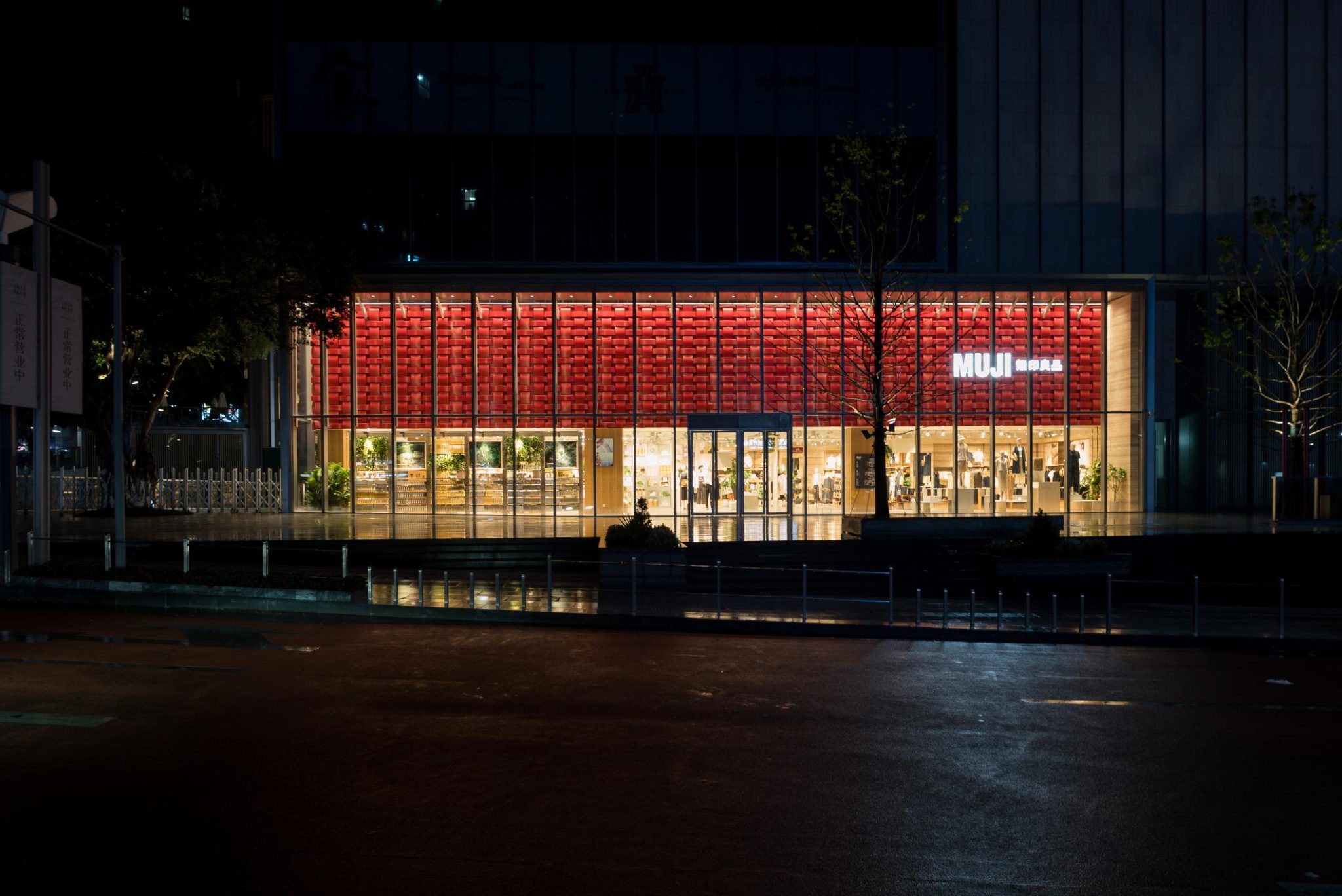
When Chongqing’s layered landscapes and fiery spirit meet MUJI’s quiet restraint and natural simplicity, they inspire the design concept of “Two Mountains Interwoven.” Using three local metaphors—Kǎn, ZHI, and BIAN—MUJI blends the city's terrain, traditional techniques, and minimalist aesthetics to create a space that feels both warm and forward-thinking. This is not only a tribute to urban vitality in Chongqing, but also a reflection of the spirit of the modern era.
Kǎn: Inspiration from terrain
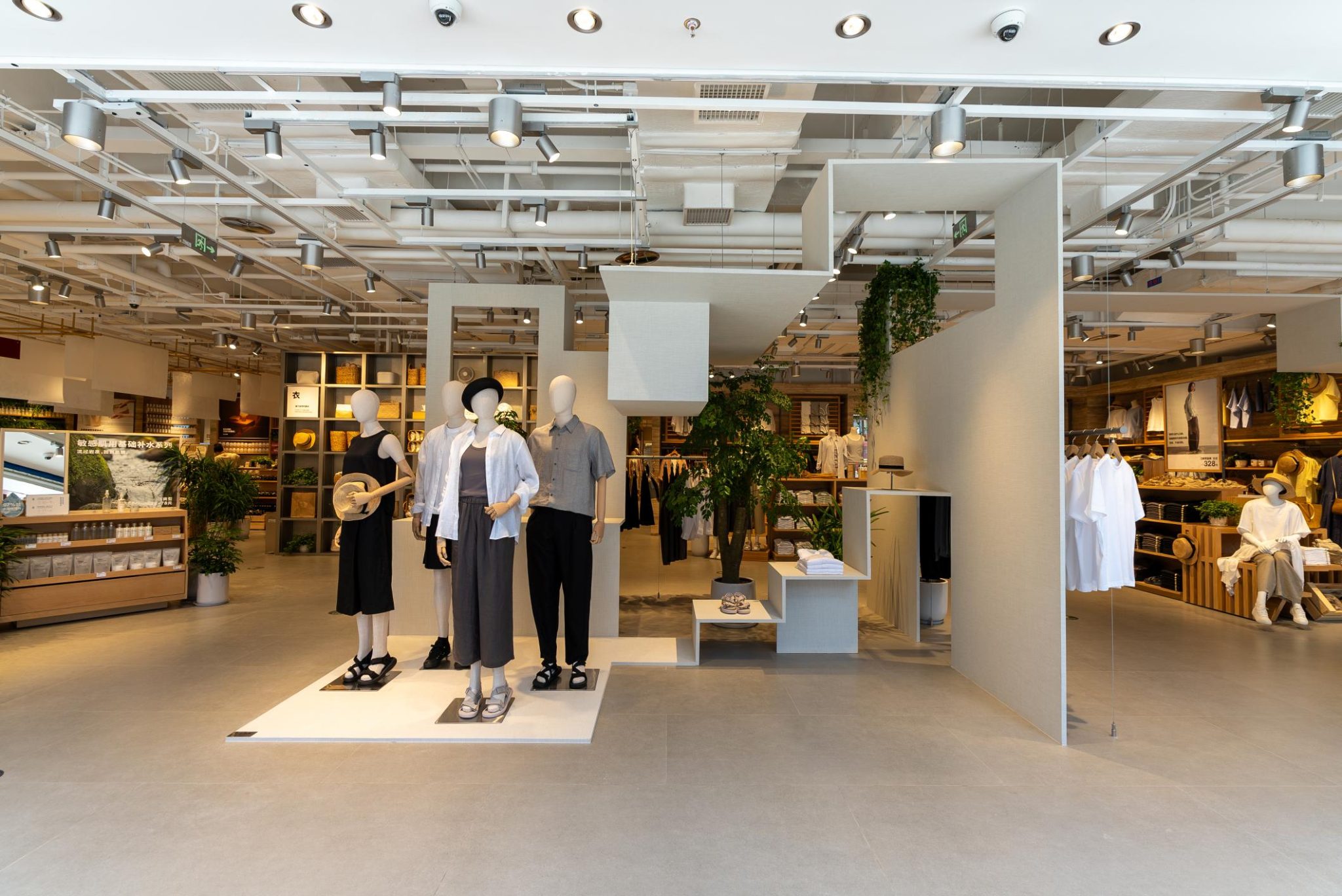
The staircases and slopes of Chongqing are signs of how people adapt to nature. MUJI translates this into a design of staggered layouts and interlocking spaces, such as “displacement” and “interlocking”. By breaking the flatness with split levels and vertical movement, different functional areas connect—much like how Chongqing locals move easily through the city's narrow paths and steep streets.
Zhi: A dialogue between materials
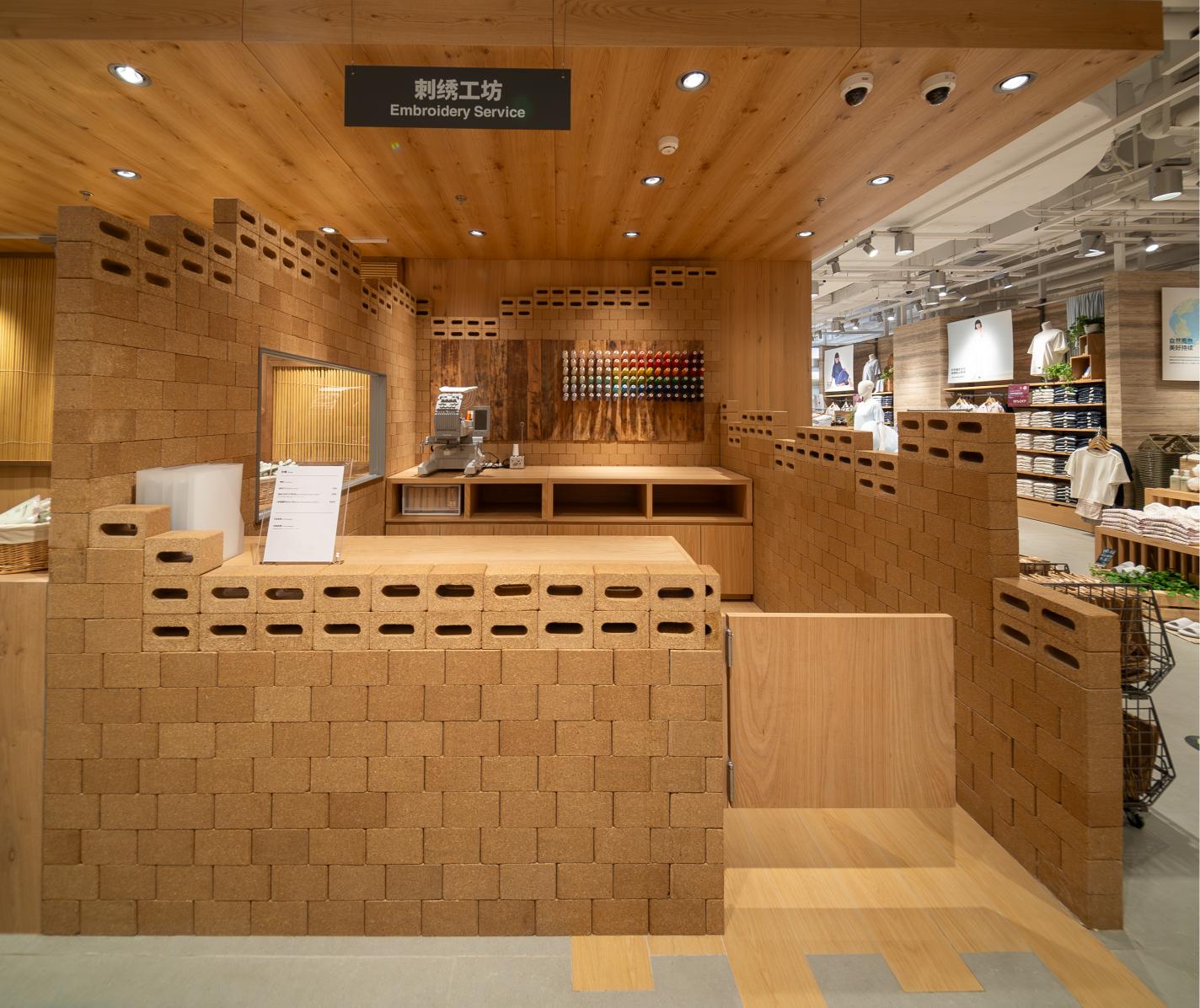
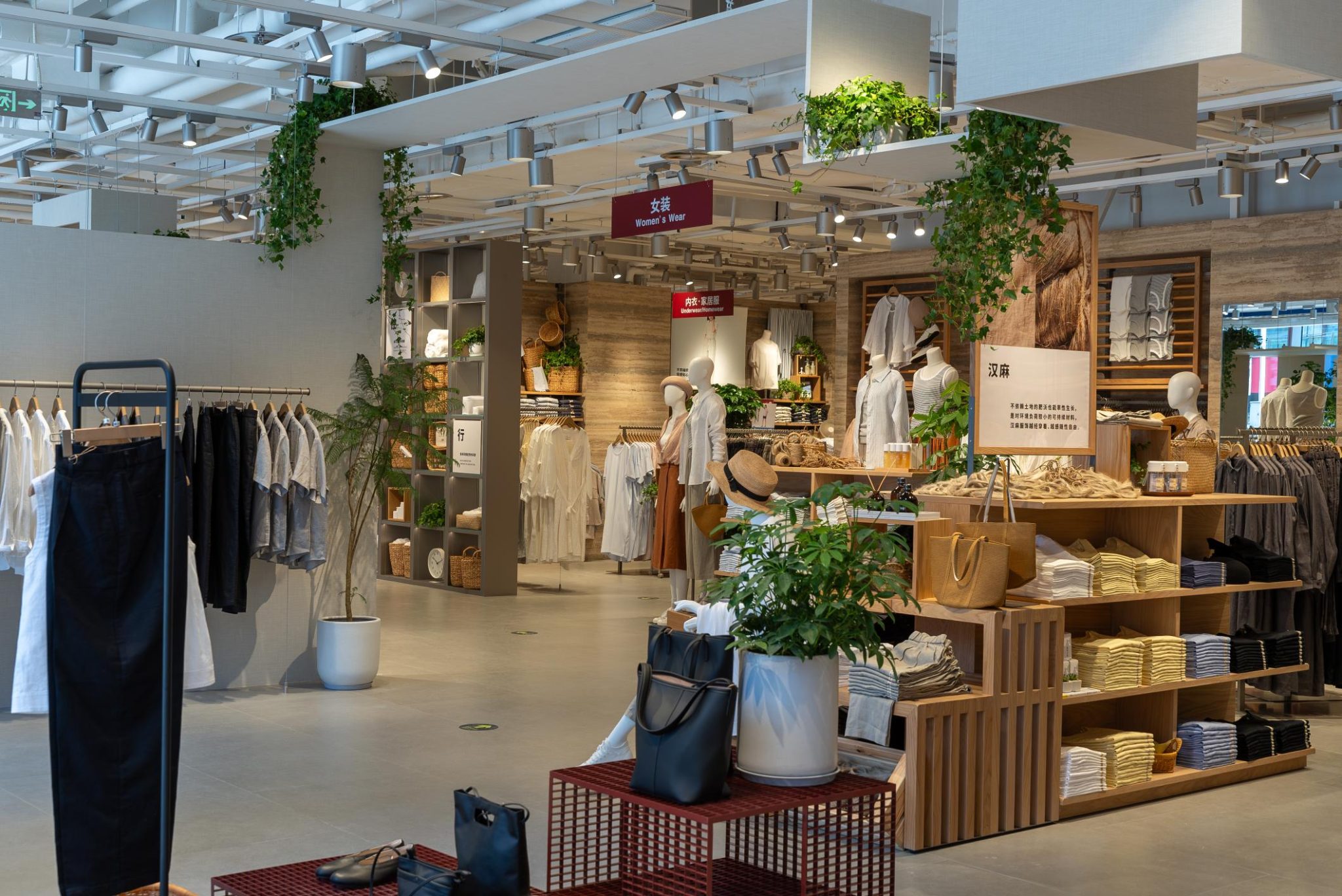
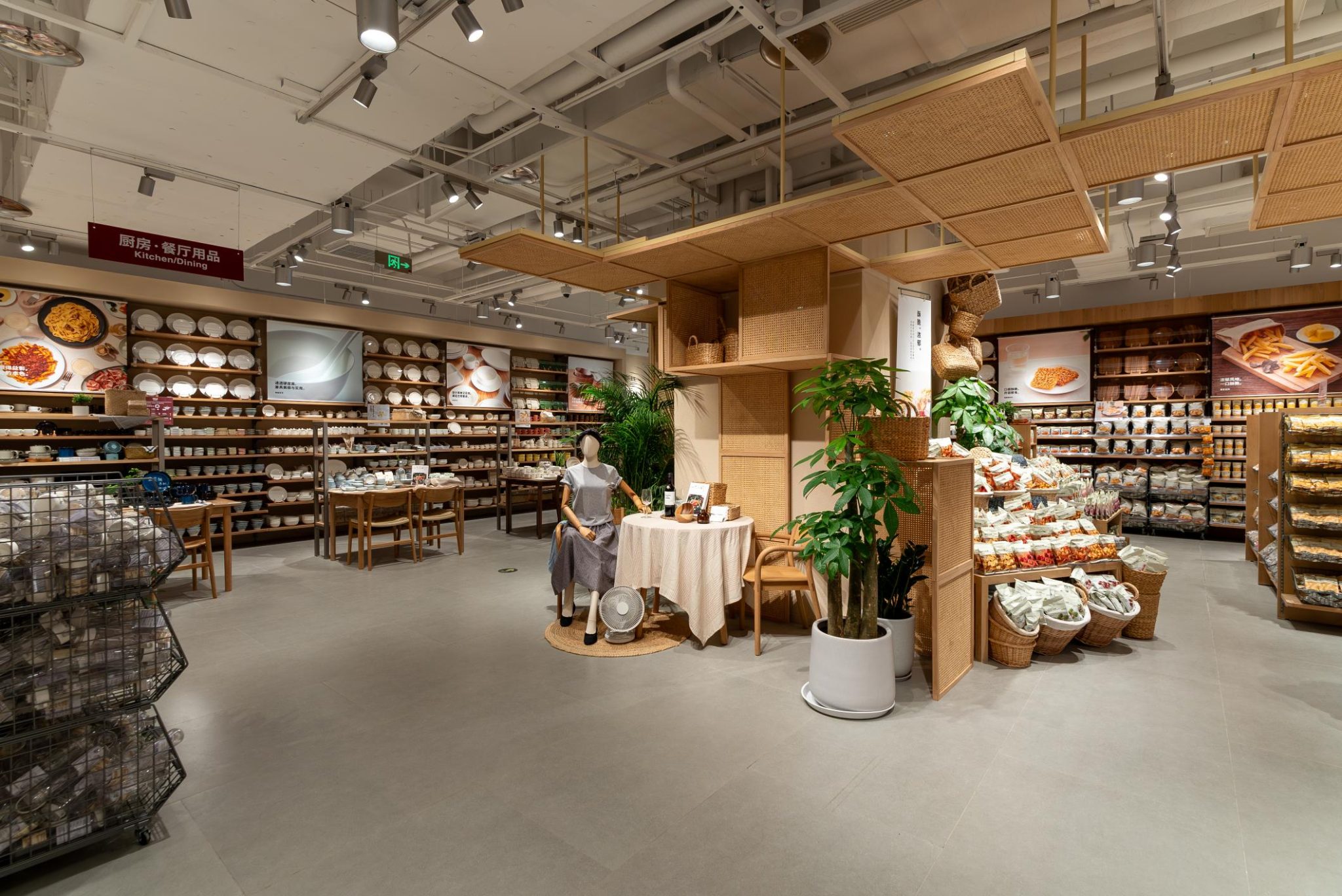
On Chongqing’s skyline, traditional elements like bamboo strips and rammed earth from old buildings stand alongside sleek metal facades of modern architecture—together forming a visual harmony between the past and the present. MUJI brings this contrast into the store: the softness of natural hemp rope and texture of recycled cork meet industrial metal frames. This contrast gives rise to an “unfinished” beauty—reflecting a city constantly evolving through the layers of its history.
Bian: The warmth of craftsmanship
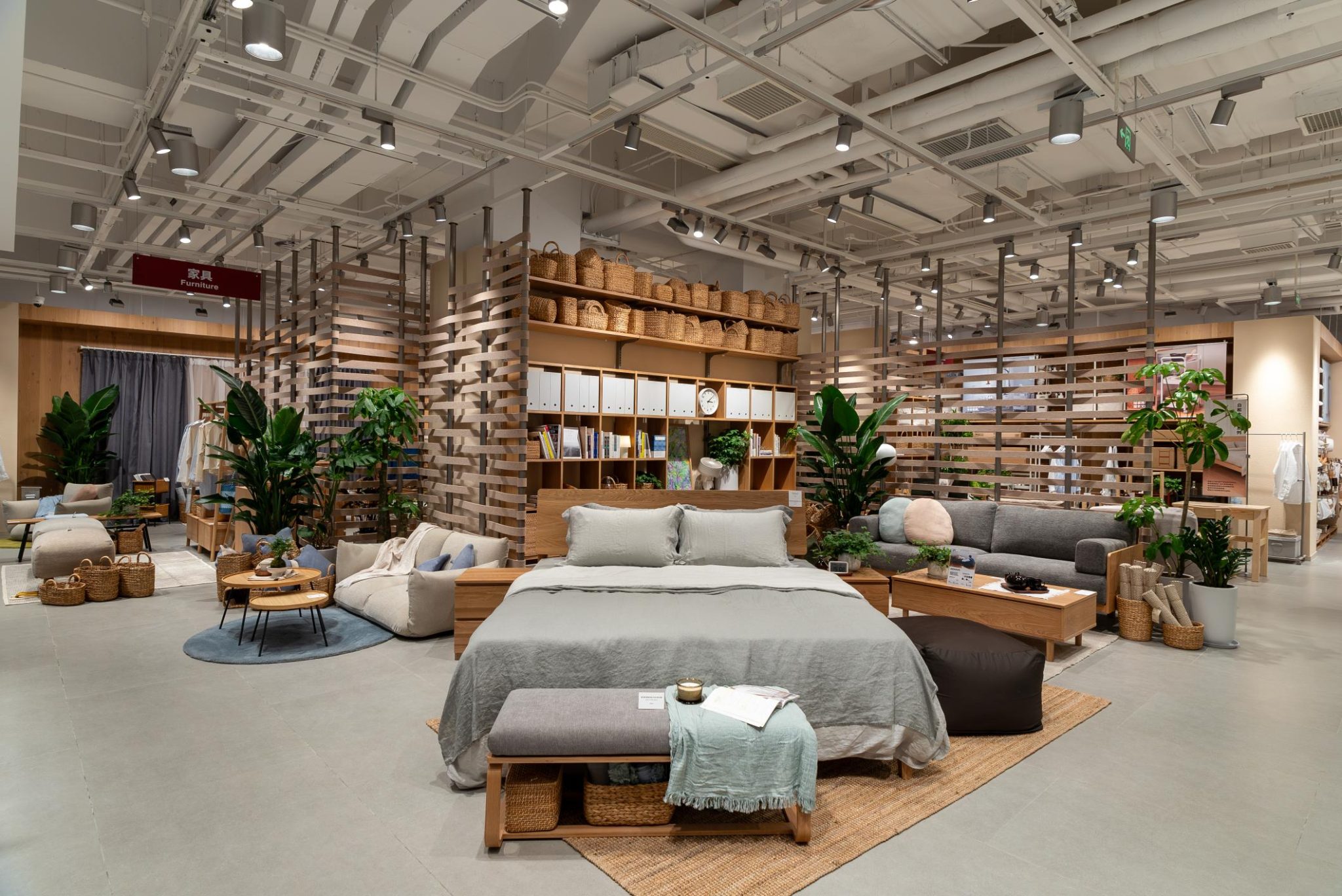
Bamboo weaving is a key part of Chongqing’s cultural heritage. MUJI turns these weaving techniques into core display elements: crosswoven bamboo strips support the displays, as rattan textures flow across the walls, infusing the space with a sense of rhythmic flow. Every handcrafted detail tells the story of “slow making” and reflects MUJI’s respect for traditional craftsmanship.
Spatial practice: Rooted in place: a three-floor spatial story
L1 Floor: "The here and now”-A gentle, sustainable everyday
The first floor embodies the concept of “life lies in the details.” Utilizing 100% biodegradable felt-woven flooring. Renewable cork bricks, and rammed earth boards as eco-friendly materials. Materials rooted in Chongqing’s streetscape, reimagined as the foundation of a modern retail space. MUJI wants to tell us that even in commercial spaces, there can be room to breathe, to feel, to heal.
L2 Floor: "Way of coexistence" – Nature meets industry
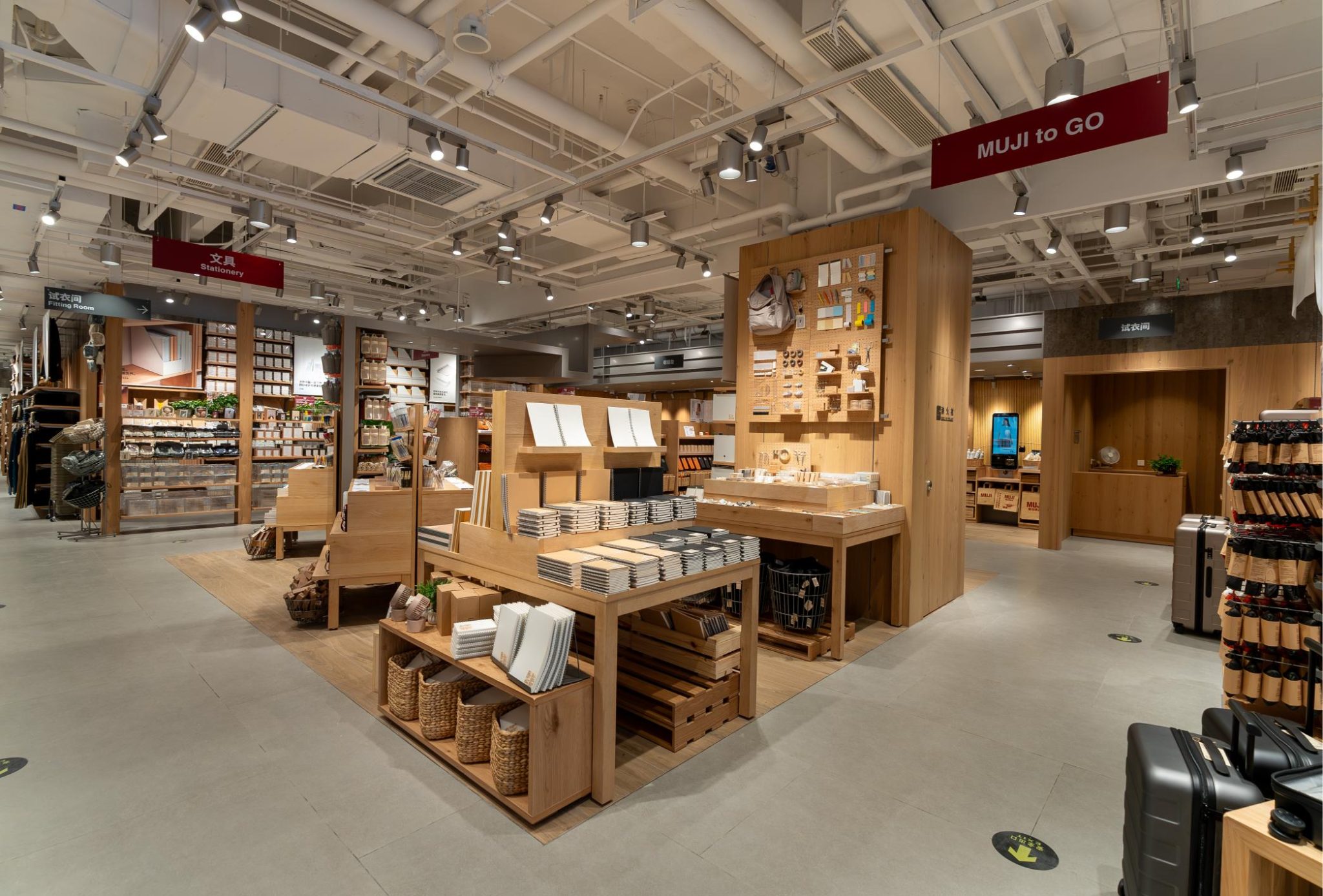
The second floor continues the dual narrative of natural materials × industrial aesthetics. Recyclable rusted iron panels form geometric frameworks, while layered installations emulate the stepped gradients of terraced farmland—distilling the rhythmic undulation of rural landscapes into the language of space. The rough texture of drammed-earth-colored walls subtly recalls Chongqing’s rugged landscape. The design balances beauty and sustainability, expressing MUJI’s vision of harmony between people and nature.
L3 Floor: "Echoes of the future" – A surreal take on tradition
The third floor explores the theme “from past to future.” Stainless steel frames and eco-friendly metal bricks give the space a cutting-edge feel, while led bamboo patterns embedded in the walls add warmth to the technology. When customers touch the bamboo-shaped interactive installations or notice the perforated bamboo weaving patterns cut into metal displays, a silent dialogue begins between old crafts and modern design.
Epilogue: A spatial poem of the city
In MUJI × Chongqing, the space is no longer just a container for products—it becomes a gentle vessel for the city’s collective memory, it also fully reflects the principles of sustainability. MUJI uses restrained design to outline a calm, open atmosphere, while filling every corner with rich local elements and sustainable details. Natural and eco-friendly materials not only bring Chongqing’s unique textures and warmth into the store, but also express deep respect and care for the environment.
- Projet "MUJI Chongqing localized spatial design project"
- designed by MUJI
- won the hornor 2025 Gold Award from Category
- Commercial Display
